NEW EPISODE
AVAILABLE NOW
There comes a moment in almost every growing business where the founder starts to feel stretched in ways they haven't before.
The business is working. Clients are coming in. Revenue is growing. Opportunities are appearing.
And yet somehow, instead of feeling easier, everything feels heavier.
You're involved in more decisions than ever. Your team has questions. Your clients need support. The business needs strategy. The operations need attention.
And somewhere in the middle of all of that, you're trying to figure out how to be everything to everyone while still moving the business forward.
I see this all the time with founders. And if I'm being honest, I've been feeling it myself. Because growth has a funny way of exposing things.
Not problems, necessarily. But limitations.
The systems that once worked stop working. The habits that helped you build the business start creating bottlenecks.
And perhaps most surprisingly, the version of you that built the business isn't always the version that can successfully grow it.
The Hidden Challenge Behind Business Growth
When we talk about growing a business, most of the conversation focuses on strategy.
Marketing. Sales. Visibility. Offers. Revenue. Systems. All important things.
But there's another factor that often determines whether a business successfully scales or stays stuck.
Leadership.
Not leadership as a buzzword. Not leadership as a title. Leadership as a daily practice.
The way you communicate. The way you make decisions. The way you create clarity. The way you build trust. The way you empower others to succeed without needing your involvement in every step.
Because eventually, every founder runs into the same reality - you cannot scale a business if everything depends on you.
The Difference Between Being a Founder and Being a CEO
One of the most important shifts a business owner makes is learning the difference between being a founder and being a CEO.
A founder builds. A CEO grows.
A founder asks:
How do I create this?
How do I deliver this?
How do I prove this works?
A CEO asks:
How do we create capacity?
How do we develop people?
How do we build systems that work without me?
How do we create sustainable growth?
Neither role is better. Both are necessary. But they require different skills. And this is where many founders find themselves in unfamiliar territory.
The expertise that helped you start your business isn't always the expertise that helps you scale it.
The answer isn't to work harder. The answer is to evolve.
When Leadership Becomes the Bottleneck
Most founders don't realize leadership has become the growth constraint until they start feeling overwhelmed.
Not because they're doing something wrong. Because they're still carrying responsibilities their business has outgrown.
You might recognize some of these signs:
- Everything needs your approval before moving forward.
- Your team constantly comes to you for answers.
- You have help, but you're still carrying most of the weight.
- You solve the same problems over and over again.
- Delegation feels difficult because you know exactly how you want things done.
- You spend your days bouncing between strategy and execution without feeling fully present in either.
Many founders assume these are operational problems. Often, they're leadership opportunities.
Because every time a founder becomes the center of every decision, they unintentionally become the bottleneck. And bottlenecks don't just slow growth.
They create exhaustion.
People Are Not Part of the Strategy. They Are the Strategy.
This is one of the biggest mindset shifts I've experienced over the past few years.
For a long time, I viewed people as one piece of the business. Now I see them differently.
People are the strategy.
Every business goal is ultimately achieved through people.
People execute the plan. People serve clients. People solve problems. People create innovation. People build culture. People drive growth.
Which means leadership isn't separate from business strategy. It IS business strategy.
When communication breaks down, strategy suffers. When accountability is unclear, growth slows. When trust is low, performance drops. When culture isn't intentional, scaling becomes harder.
Everything comes back to people. And people always come back to leadership.
The Question Every Founder Needs to Ask
Most business owners spend a lot of time asking...What should I do next?
It's a reasonable question. But it may not be the most important one.
A more powerful question might be...Who do I need to become for this business to reach its next level?
Because growth isn't always about doing more. Sometimes it's about becoming a different kind of leader.
A leader who creates clarity instead of carrying everything. A leader who develops people instead of solving every problem. A leader who builds capacity instead of becoming the capacity.
That's the real work of scaling.
And it's work that every founder eventually faces. Not because they're failing. But because their business is asking them to grow right alongside it.
The Leadership Conversation We Need to Have More Often
Founders spend countless hours learning sales, marketing, finance, and operations.
Yet very few are ever taught how to lead people.
And when a business starts growing, that gap becomes impossible to ignore. Because sustainable growth doesn't happen through products, or service, or marketing alone.
It happens when leadership, people, and culture evolve alongside the business itself.
That's the conversation I'm most passionate about having.
Because the people side of business isn't separate from the business. It IS the business.
As I continue navigating this season of growth in my own business, these are the conversations I'm finding myself drawn to more and more. Not just how we build successful businesses, but how we grow into the leaders those businesses need us to become.
Because behind every scaling company is a founder wrestling with new decisions, new responsibilities, and often a new identity.
And if that's where you find yourself right now, I want you to know you're not alone.
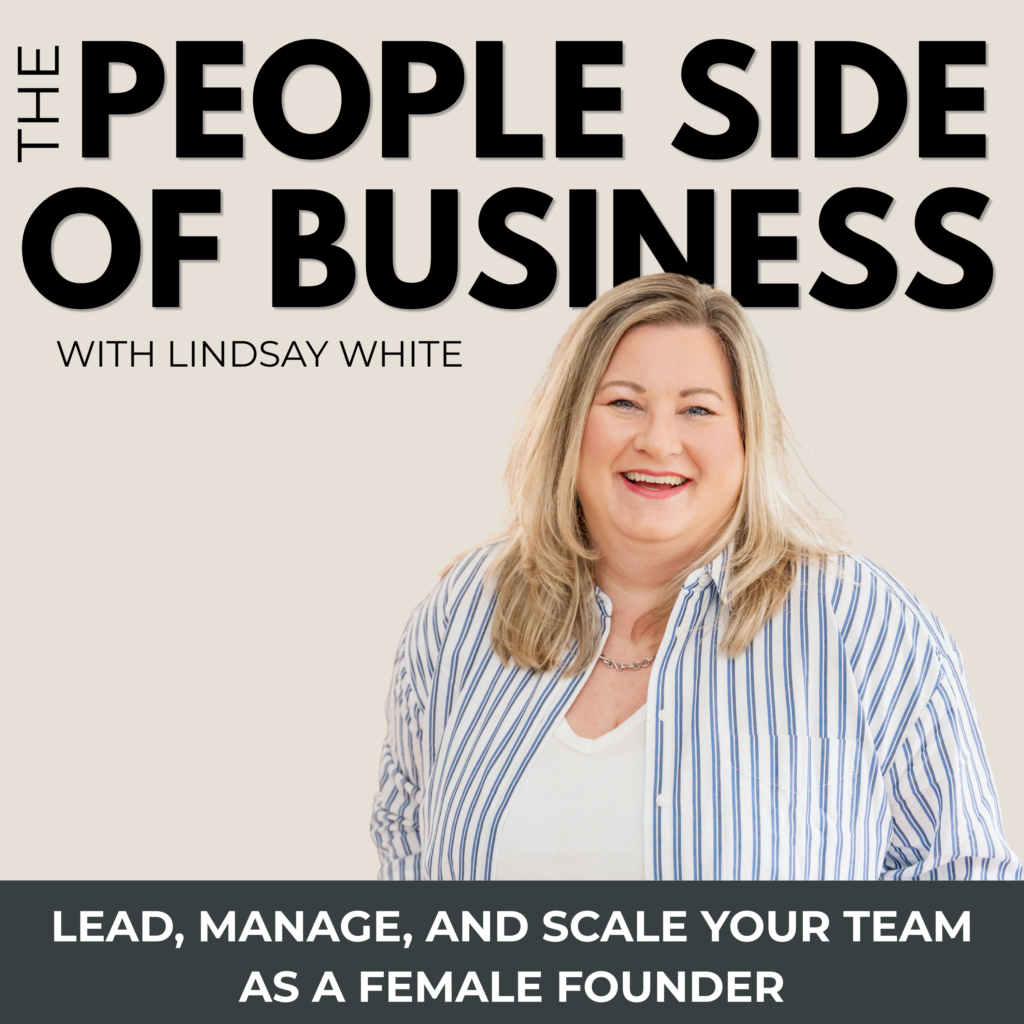
In fact, it's exactly why I created The People Side of Business.
It's a space for honest conversations about leadership, people, culture, growth, and the realities of building a business that can thrive without requiring you to carry every piece of it yourself.
If this conversation resonated with you, I'd love to invite you to continue it with me.
You can listen to the full episode here.
And when you do, send me an email or a message on LinkedIn and let me know....
Where is your business asking you to become a different kind of leader right now?
I read every message, and some of the most meaningful conversations—and future podcast episodes—start there.
More Episodes
There comes a moment in almost every growing business where the founder starts to feel stretched in ways they haven't before.
The business is working. Clients are coming in. Revenue is growing. Opportunities are appearing.
And yet somehow, instead of feeling easier, everything feels heavier.
You're involved in more decisions than ever. Your team has questions. Your clients need support. The business needs strategy. The operations need attention.
And somewhere in the middle of all of that, you're trying to figure out how to be everything to everyone while still moving the business forward.
I see this all the time with founders. And if I'm being honest, I've been feeling it myself. Because growth has a funny way of exposing things.
Not problems, necessarily. But limitations.
The systems that once worked stop working. The habits that helped you build the business start creating bottlenecks.
And perhaps most surprisingly, the version of you that built the business isn't always the version that can successfully grow it.
And if I'm being honest, I've been feeling it myself. Because growth has a funny way of exposing things.
Have you ever felt like everyone is talking about marketing, sales, and scaling, yet no one is talking about the leadership challenges that come with building a business? That gap is exactly why leadership skills for female business owners deserve a much bigger conversation. Because while growth strategies matter, businesses ultimately succeed or struggle based on the people leading them.
Women founders are building impactful companies while often balancing responsibilities far beyond the business itself. Yet conversations around business leadership for women frequently take a back seat to tactics and visibility. And this is where many entrepreneurs discover a hard truth: your business can only grow as far as your leadership allows.
Subscribe To The High Voltage Hub!
Sign up now to receive bi-weekly news and updates. We will never spam you!