WHERE LEADERSHIP MEETS GROWTH
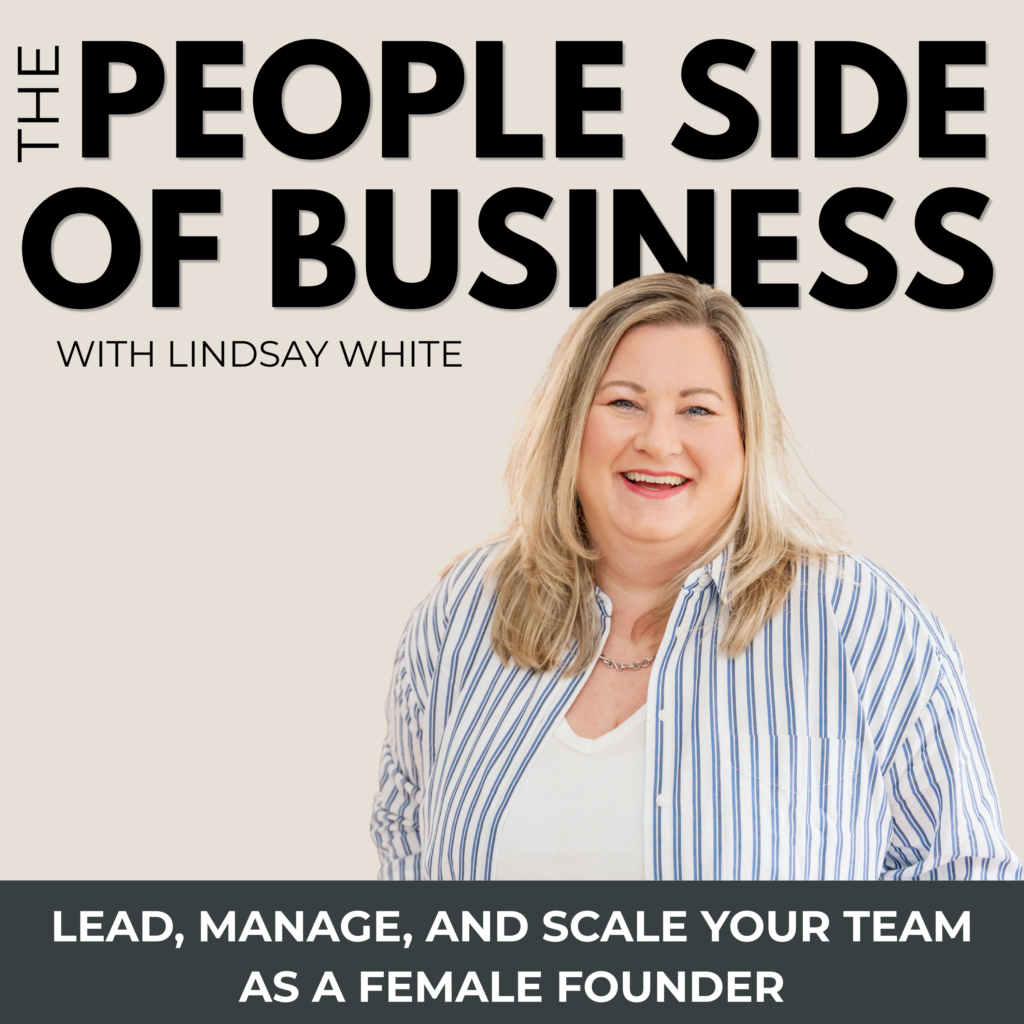
THE PEOPLE SIDE OF BUSINESS
The People Side of Business podcast is for founders and business owners who are good at what they do but were never shown how to develop and lead the people around them.
Every week, Lindsay White breaks down the real situations no one prepares you for: the employee who isn't performing, the conversation you've been putting off, the hire that felt right and wasn't.
Practical, direct, and grounded in what actually works.
Because growing a business is one skill.
Growing a team is another.
This show is where you learn the second one.
MEET YOUR HOST
Lindsay White
Fractional HR Expert | Team Leadership Strategist | Leadership Coach for Female Founders

Hi, I’m Lindsay White. I’m a lifelong HR professional who spent decades in the trenches of large business workplace strategy before realizing that the founders who needed me most had never had access to someone like me.
This podcast exists because most business owners don’t get a seat at the HR table until something has already gone wrong. So I built a place to change that.
Around here, we talk about what it actually looks like to lead a team with confidence — the hard conversations, the hiring decisions, the culture questions, and everything in between that no one warns you about when you bring on your first employee.
Because the goal isn’t just to build a business. It’s to build one that doesn’t fall apart the moment people are involved.
Hi, I’m Lindsay White. I’m a lifelong HR professional who spent decades in the trenches of large business workplace strategy before realizing that the founders who needed me most had never had access to someone like me.
This podcast exists because most business owners don’t get a seat at the HR table until something has already gone wrong. So I built a place to change that.
Around here, we talk about what it actually looks like to lead a team with confidence — the hard conversations, the hiring decisions, the culture questions, and everything in between that no one warns you about when you bring on your first employee.
Because the goal isn’t just to build a business. It’s to build one that doesn’t fall apart the moment people are involved.
Lastest Episodes
If you’re trying to figure out how to manage employees who are smart, capable and experienced—but somehow every decision still comes back to you—the problem may not be your team.
You may have accidentally taught them that asking you is easier than making the decision themselves.
One of the most important leadership skills you can develop is knowing when not to provide the answer. If you want to know how to lead a team that can think independently, start by returning the thinking to them.
That shift creates space for stronger decision making—but questions alone aren’t enough.
Managing employees with greater ownership also means being clear about decision-making authority.
How to scale a team gets complicated when you realize the people who helped you get here may not be the people—or the roles—you need to get where you’re going next. Oof. That’s a hard one, my friend.
Because when you’re scaling a business, these decisions aren’t just boxes on an org chart. These are real people. People you care about. People who may have been beside you through some pretty messy seasons. But you’re also the CEO, and part of your job is building the team your business needs for its next stage of growth.
So, how do you know when to develop someone, redesign their role, hire new talent—or make the really difficult decision to let someone go? Learning how to scale a team starts with a better question: is there alignment between what this person wants and can contribute and what the business actually needs next?
Team management strategies can only go so far when your team no longer feels confident enough to step up. If people who once made decisions, solved problems, and brought you ideas are suddenly hesitating, it’s natural to wonder what changed. You might even start questioning whether they care as much as they used to. But there may be something else going on.
Strong leadership skills aren’t about always having the answer. They’re about developing your team’s ability to find one. Lindsay shares how one overwhelmed founder began replacing instant solutions with better questions, giving her people the space and expectation to think critically. It’s a practical shift in how to lead a team that builds problem-solving capacity rather than dependency.
You’ll learn team management strategies for coaching your team through challenges, asking questions that strengthen judgment, and resisting the urge to solve problems simply because it’s faster. You’ll also see why leadership struggles in teams aren’t always a people problem. Sometimes the real issue is unclear ownership, fuzzy expectations, or a lack of context.
What if the reason you’re constantly following up isn’t that your team lacks accountability—but that they lack clarity?
Holding Employees Accountable starts long before a missed deadline or performance conversation. Lindsay White reframes accountability as a leadership responsibility: when expectations, priorities, ownership, and communication are clear, people are more likely to make strong decisions without being micromanaged.
Through a client example, Lindsay shows how growth can actually create performance problems. The business had changed, but the founder’s updated vision and priorities were still living in her head. The team was working from yesterday’s information while the business was moving toward tomorrow.
Most founders think People and Culture starts with hiring. It doesn’t. It starts with building a business that can grow without relying on you to carry every decision, solve every problem, and hold everything together.
If your business is growing but you still feel like the bottleneck, it's a sign your People and Culture strategy needs to evolve alongside your business. Sustainable growth isn't created by adding more people—it comes from intentionally designing the leadership, team structure, and workplace environment your future business will need.
Subscribe To The High Voltage Hub!
Sign up now to receive bi-weekly news and updates. We will never spam you!