NEW EPISODE
AVAILABLE NOW
What if the reason you’re constantly following up isn’t that your team lacks accountability—but that they lack clarity?
Holding Employees Accountable starts long before a missed deadline or performance conversation. Lindsay White reframes accountability as a leadership responsibility: when expectations, priorities, ownership, and communication are clear, people are more likely to make strong decisions without being micromanaged.
Through a client example, Lindsay shows how growth can actually create performance problems. The business had changed, but the founder’s updated vision and priorities were still living in her head. The team was working from yesterday’s information while the business was moving toward tomorrow.
This is where leadership skills matter. Instead of avoiding difficult conversations, leaders can set expectations early, define ownership, communicate change, and give feedback before small issues become bigger ones. Lindsay explains why difficult conversations with employees become easier when expectations are clear—and how stronger business communication skills can reduce follow-up.
You’ll learn how to distinguish a true performance issue from a clarity issue, create clearer expectations, and build a culture where ownership is part of the way work gets done. Holding Employees Accountable is not about catching people doing something wrong; it’s about creating the conditions where accountability can actually work.
The goal isn’t to manage every move your team makes. It’s to give people enough clarity to solve problems, take ownership, and move the business forward without every decision landing on your desk. Holding Employees Accountable becomes less about control and more about leadership.
Ready to stop carrying the accountability burden alone? Download The Accountability Scorecard here to create clearer expectations and more consistent follow-through.
If you’re ready to feel more confident in how you manage your team and make decisions as a leader, this is a good place to start. Listen to the show here:
•Spotify: https://open.spotify.com/show/43mOE8iU4bbiPyOYQBk4PI?si=de340ece7f8348d0
•Apple Podcasts: https://podcasts.apple.com/ca/podcast/the-people-side-of-business-team-management/id1554492119
_______________________________________________________________________
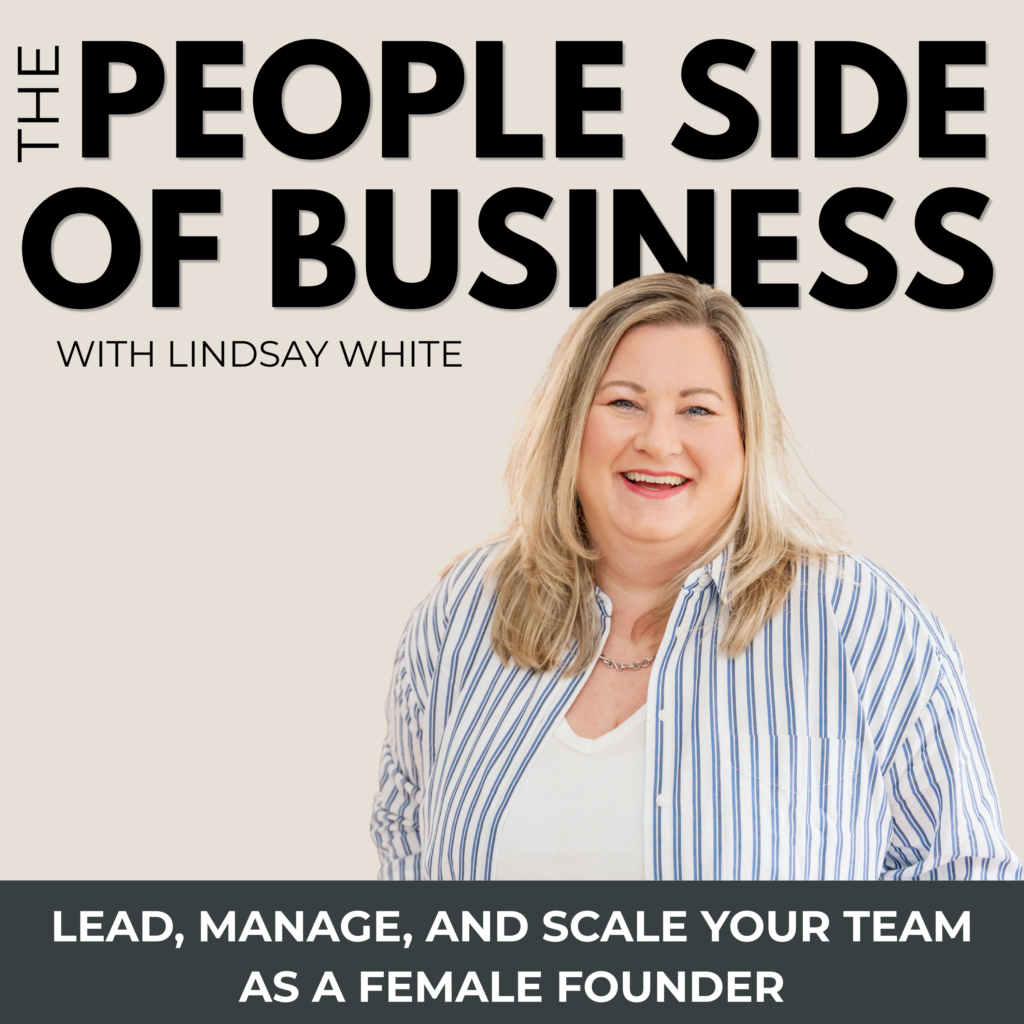
The People Side of Business is the podcast for female founders and business owners who are leading teams and growing businesses.
Hosted by Lindsay White, Leadership Coach, Team Leadership Strategist, and Fractional HR Expert, this show delivers practical leadership strategies, real-world people solutions, and honest conversations about the challenges of leading a team.
From employee performance issues and difficult conversations to hiring, accountability, workplace culture, and team growth, each episode is designed to help you lead, manage, and scale your team as a founder.
If you're ready to become a more confident leader, make better people decisions, and build a stronger, higher-performing team, you're in the right place.
Learn more at highvoltageleadership.ca, connect on Instagram @highvoltleadership, or find Lindsay White on LinkedIn.
The people side of business isn't separate from growth. The people side of business is the business.
More Episodes
Leadership skills for business owners become especially important when you’ve built a smart, capable team—but somehow every decision still seems to come back to you.
You’ve hired good people. You trust them. You want them to take ownership. So why are you still answering the questions, clarifying the priorities, approving the work and solving the problems?
In this episode, we’re looking at five very normal leadership behaviours that can unintentionally create dependency—from stepping back into strategic ownership and creating confusion about decision making, to communicating urgency without enough context and giving feedback that makes people more cautious instead of more capable.
If you’re trying to figure out how to manage employees who are smart, capable and experienced—but somehow every decision still comes back to you—the problem may not be your team.
You may have accidentally taught them that asking you is easier than making the decision themselves.
One of the most important leadership skills you can develop is knowing when not to provide the answer. If you want to know how to lead a team that can think independently, start by returning the thinking to them.
That shift creates space for stronger decision making—but questions alone aren’t enough.
Managing employees with greater ownership also means being clear about decision-making authority.
Subscribe To The High Voltage Hub!
Sign up now to receive bi-weekly news and updates. We will never spam you!